
Moving into a new home can be exciting, but it also creates a long list of decisions for parents. Beyond packing boxes and changing addresses, families often need to coordinate transportation, storage, repairs, school enrollment, neighborhood research, and activities for children. When several responsibilities overlap, a clear plan can make the transition feel more manageable and reduce last-minute problems.
The process becomes easier when parents break the move into stages. Some tasks need attention weeks before moving day, while others are better handled after the family has unpacked and learned more about the new area. Thinking about both the home and the family’s routine can help everyone settle in more comfortably. From choosing a local moving company to finding schools, recreation opportunities, and home service providers, each decision plays a role in creating a smoother start.
Build a Moving Timeline Before Packing Begins
A detailed moving timeline gives families a practical way to organize responsibilities without trying to handle everything at once. Start by listing major deadlines, including the closing date, lease end date, utility transfers, school registration deadlines, and moving day. Then work backward so there is enough time for packing, cleaning, paperwork, and appointments.
Parents should also decide which belongings will move immediately and which can be stored temporarily. A storage company can be helpful when there is a gap between homes, limited space in the new property, or renovation work that needs to happen before furniture is placed. Keeping nonessential items out of the way may make unpacking and repairs easier.
Create separate checklists for household tasks, children’s needs, and administrative responsibilities. This helps prevent school records, medical documents, pet information, or important financial paperwork from getting mixed into general packing. Families can also assign age-appropriate responsibilities to children, such as labeling boxes or packing a personal bag.
A strong timeline should include flexibility. Delays can happen with contractors, deliveries, closing dates, and travel. Leaving a few open days before and after the move can help families respond to changes without disrupting every other task on the schedule.
Keeping a shared calendar helps parents see overlapping deadlines and divide responsibilities before smaller tasks become urgent household problems.

Choose Moving Services Based on Distance and Household Needs
The right moving provider depends on the size of the household, the distance involved, and how much help the family wants. A local moving company may be a practical option for a move within the same city or nearby community because local crews are often familiar with area roads, building access requirements, and common moving challenges.
Families relocating across state lines or over a significant distance may need long distance moving services instead. These moves often require more detailed scheduling, inventory planning, and communication because belongings may spend more time in transit. Parents should confirm pickup and delivery expectations, insurance options, and procedures for handling delays before signing an agreement.
It is also useful to ask what services are included. Some movers provide packing, furniture disassembly, appliance preparation, and specialty handling, while others focus only on transportation. Comparing estimates should involve more than looking at the final price. Families should review what each quote includes so they can identify additional fees or responsibilities that may arise later.
Before moving day, prepare a clearly labeled essentials box with medications, chargers, toiletries, snacks, important documents, clothing, and basic supplies. Keeping those items with the family instead of loading them onto the truck can make the first night in the new home much easier.
Families should request written estimates and verify policies so unexpected schedule changes do not create confusion during the move.
Prepare the New Home Before the Family Arrives
Whenever possible, complete basic repairs and cleaning before moving furniture into the new home. Empty rooms are easier to inspect, paint, patch, and clean, and service providers can often work more efficiently without boxes or large furniture blocking access.
Families moving into a condo or apartment may notice wall damage left from shelves, televisions, artwork, or previous repairs. Local apartment drywall contractors can address dents, holes, cracks, and damaged sections before the new household is fully unpacked. Completing this work early can help rooms look finished and reduce the need to move furniture again later.
A pre-move inspection should also cover locks, smoke detectors, carbon monoxide detectors, lighting, plumbing fixtures, heating and cooling systems, and major appliances. Parents may want to replace exterior locks or reprogram smart locks so they know exactly who has access to the property.
Cleaning is another useful step. Even when a home appears clean, wiping cabinets, sanitizing bathrooms, cleaning floors, and checking closets can make unpacking more comfortable. Families should also identify where essential supplies will be stored. Knowing where tools, cleaning products, flashlights, first-aid materials, and household paperwork belong helps create order from the beginning.
Taking photos before furniture arrives can document existing damage and give families a useful reference for future repairs later.

Clear Out Unwanted Items During the Transition
Moving is a good opportunity to decide which possessions are still useful and which no longer need to come along. Sorting before packing can reduce the number of boxes, lower moving costs, and make the new home easier to organize. Families can separate belongings into categories for keeping, donating, selling, recycling, and disposal.
For larger cleanouts, local dumpster rentals may be useful when families are clearing a garage, basement, attic, storage area, or property that needs significant work. Local providers may also offer portable toilets for larger projects, reducing the need to coordinate multiple vendors during a move day. Parents should check local rules and rental guidelines before placing materials into a container because some items require special handling.
Children can participate by reviewing toys, clothes, books, and hobby supplies they have outgrown. Giving them some control over what moves to the new home can make the transition feel more positive. Items in good condition may be donated to community organizations or passed along to friends and relatives.
Avoid waiting until moving day to make disposal decisions. Last-minute sorting can slow down loading and create unnecessary stress. Decluttering several weeks ahead gives the family time to make thoughtful choices and prevents unwanted belongings from taking up valuable space in the new home.
Checking municipal collection rules can clarify what belongs in household trash, recycling bins, donation centers, or specialized disposal programs.
Research Schools Before the First Day
For families with school-age children, education is often one of the most important parts of relocating. Parents should begin researching options early so they understand enrollment requirements, transportation, academic calendars, extracurricular activities, and any documents that need to be transferred from the previous school.
When comparing elementary schools, families may want to consider class structure, academic programs, support services, transportation, before-school and after-school care, and opportunities for parent involvement. Visiting a school can also help children become familiar with the building and reduce uncertainty before their first day.
Older students may have different needs. A local private middle school may appeal to families looking for smaller class sizes, specific academic approaches, religious education, specialized programs, or particular extracurricular opportunities. Parents should review admissions requirements, tuition, schedules, transportation, and the school’s overall approach to student development before deciding whether it is a good fit.
School transitions can be emotional as well as logistical. Children may miss friends, teachers, routines, and familiar surroundings. Parents can help by keeping communication open, encouraging questions, and acknowledging that adjustment may take time. Establishing a predictable morning and evening routine after the move can also provide stability while children adapt to a new academic environment.
Parents can ask about counseling resources, orientation programs, and student clubs that may help newcomers build connections more quickly.
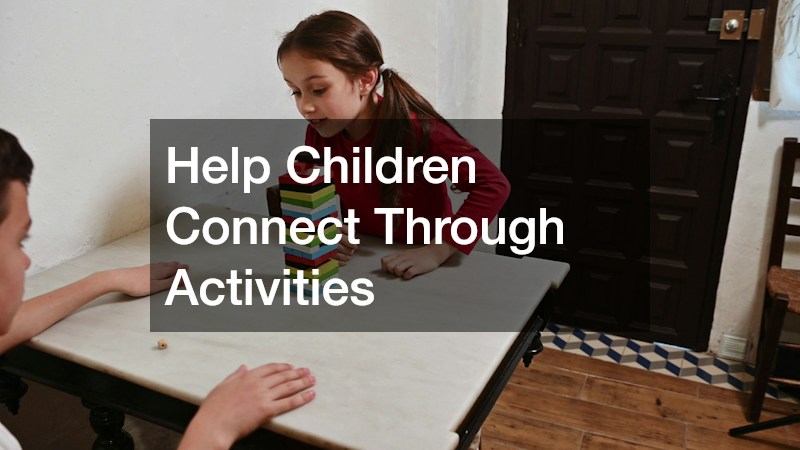
Help Children Connect Through Activities
Finding activities outside school can help children feel more connected to a new community. Sports, music, clubs, library events, recreation programs, and neighborhood activities can provide opportunities to meet peers and develop a sense of belonging. Parents do not need to fill every afternoon, but one or two familiar interests may help create continuity after a move.
Creative children may enjoy joining an art program through a school, community center, museum, or private studio. Drawing, painting, ceramics, photography, and other creative activities can give children a productive outlet while introducing them to classmates with similar interests. Parents can compare schedules, age groups, costs, and program formats before enrolling.
Seasonal programs can also support the transition. Families searching for a summer camp may be looking for a structured option that keeps children active during the break and helps them meet other kids before the next school year begins. Parents should review supervision, daily activities, staff qualifications, transportation, and registration deadlines when comparing programs.
It can be helpful to let children participate in choosing their activities. Giving them a say may increase enthusiasm and help the new community feel more like their own. Families should also leave room for downtime, since adjusting to a new home, school, and neighborhood can be tiring even when the change is positive.
Library calendars and community newsletters are useful places to find low-cost events that let families explore interests together nearby.
Create Familiar Routines in the New Home
A house begins to feel like home when everyday routines start to return. After the first wave of unpacking, families can focus on creating familiar spaces and schedules. Setting up children’s bedrooms early can be especially helpful because it gives them a personal area that feels stable while the rest of the home is still being organized.
Try to restore regular meal times, bedtimes, homework routines, and weekend habits as soon as practical. Familiar patterns can make the transition less disruptive and help parents identify which new responsibilities still need attention. It is also useful to establish household systems for mail, backpacks, shoes, laundry, groceries, and school paperwork before clutter begins to accumulate.
Families can make the new environment feel more welcoming by displaying familiar photos, decorations, books, and sentimental items. Children may also enjoy choosing where certain belongings go or helping decorate a bedroom or play area. Small decisions can give them a greater sense of ownership.
At the same time, avoid trying to make every room perfect immediately. Unpacking in stages allows the household to learn how it actually uses the space. After a few weeks, parents may discover that furniture, storage, or room functions need adjusting. A flexible approach can create a home that supports the family’s real routine instead of forcing a layout too quickly.
A weekly family check-in can help everyone discuss what is working, what feels difficult, and what needs adjustment next.

Learn the Neighborhood and Build a Local Support Network
Settling into a new home extends beyond the property itself. Families also need time to learn the surrounding area, identify useful services, and build connections. Exploring the neighborhood together can help everyone become more comfortable with local streets, parks, stores, schools, libraries, and recreation areas.
Parents should create a list of practical contacts, including doctors, dentists, pharmacies, emergency services, veterinarians, repair professionals, childcare providers, and nearby relatives or friends. Keeping this information in one place makes it easier to respond when something unexpected happens. Families may also want to identify grocery stores, hardware stores, gas stations, and other businesses they will use regularly.
Meeting neighbors can make the area feel more familiar. A simple introduction, neighborhood event, school activity, or community gathering may lead to useful recommendations and new friendships. Parents can also look for local social groups, volunteer opportunities, faith communities, sports organizations, or parent networks that match their interests.
Keeping a list of favorite places and contacts can gradually turn an unfamiliar community into a dependable home base.
Most families will not feel completely settled after a single week. Moving is a process that continues after the boxes are unpacked. By organizing the move carefully, preparing the home, researching schools, finding activities, and learning the community, parents can create a stable foundation for the next stage of family life. With time, new routines and relationships can turn an unfamiliar address into a place that truly feels like home.